
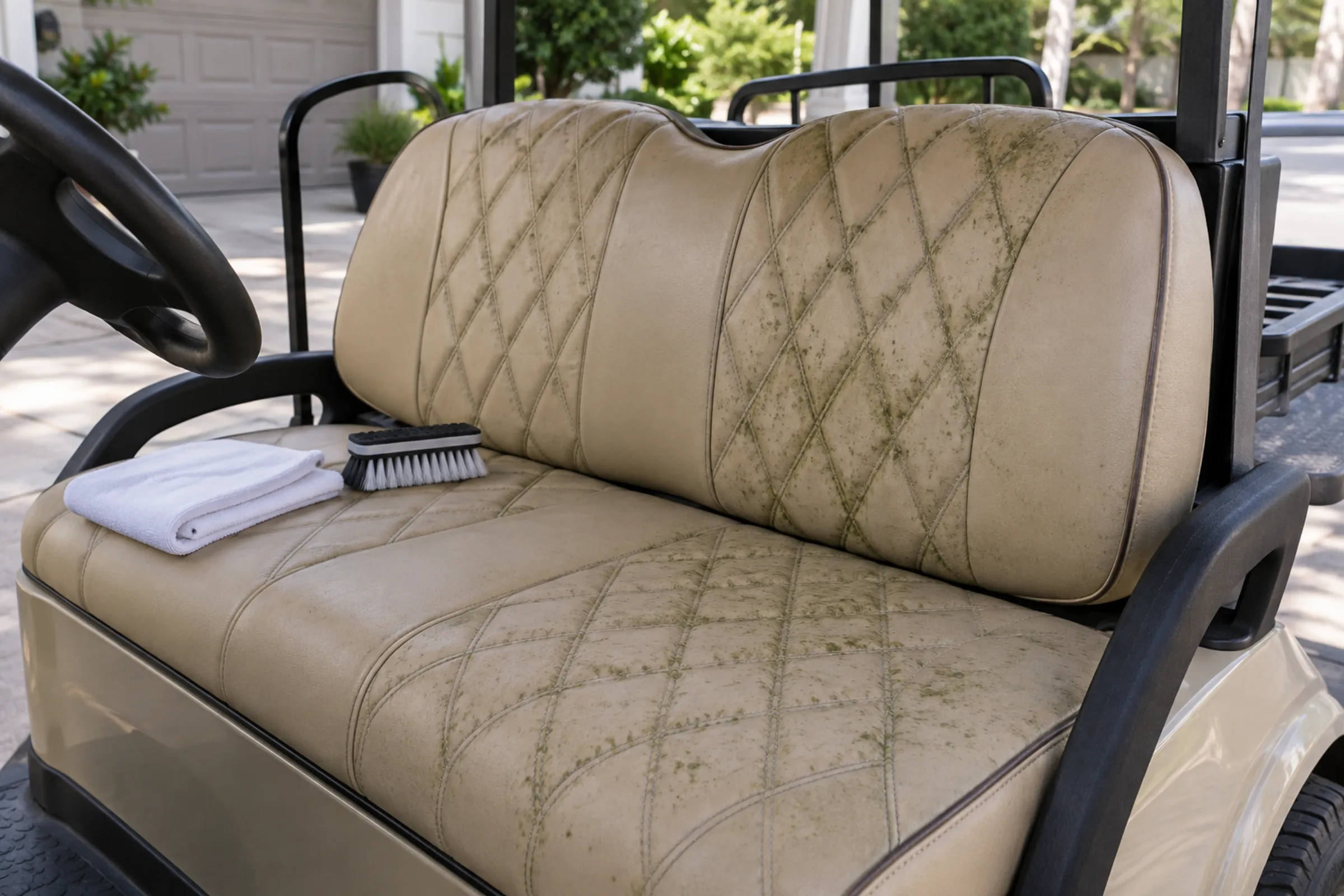
Every August the same message arrives from somewhere between Folly and Isle of Palms: the seats have black spots along the seams, the cart smells like a beach towel that never dried, and somebody on the internet said bleach. Put the bleach down. Here is the method that works, and the mistakes that turn a cleaning problem into a reupholstery problem.
Know your enemy
Those spots are mildew, a surface mold that feeds on the film of sunscreen, body oils, food, and organic grime that builds up on marine-grade vinyl. It roots in the stitching and seam piping, which is why it always appears along the seams first, and why wiping the surface brings it back within weeks. Charleston humidity does the rest; vinyl seats here can stay damp at the seams for days after a rain.
What ruins vinyl (do not do these)
- Straight bleach. It kills surface mildew and also breaks down the vinyl's plasticizers and eats the stitching. Bleached seats turn stiff, yellow, and crack-prone. Marine upholstery shops will tell you bleach is their best salesman.
- Magic erasers. They are micro-abrasives. They remove the mildew along with the vinyl's protective top layer, leaving a dull patch that soils faster than ever.
- Pressure washers. Water driven into the seams saturates the foam under the vinyl, and wet foam is a mildew farm you cannot reach.
- Silicone shine dressings. Not a cleaning mistake but a feeding one: greasy dressings attract and hold the grime mildew eats. Use water-based protectants only.
The method that works
You need: vinyl cleaner or a mild soap solution (a squirt of dish soap in warm water is fine), a soft-bristle brush, microfiber towels, and a dedicated mildew remover made for marine vinyl if the spotting is established.
- Dry brush first. Loose sand and grit act like sandpaper under a wet brush. Brush or vacuum the seats dry before anything touches them wet.
- Wash with soap, not solvents. Work the soap solution over the whole seat with the soft brush, not just the spots. The invisible grime film is the food source; remove it everywhere.
- Attack the seams. Angle the brush along the piping and stitch lines with light pressure. This is where the colony lives. A soft toothbrush earns its keep here.
- Use a marine mildew remover on the spots. These are formulated to kill growth without bleaching vinyl. Follow the dwell time on the label; the killing happens during the wait, not the wipe.
- Rinse with a damp cloth, dry with towels. Do not flood the seat. The goal is zero water reaching the foam.
- Protect. Finish with a water-based UV protectant, matte, not glossy. It slows UV aging and makes the surface less hospitable next time.
Afterward, park for airflow. A breathable cover over a dry cart is fine; a waterproof cover over a damp one undoes everything you just did.
When the home method is not enough
Surface cleaning has a limit, and it is the stitching. Once mildew is rooted deep in the seams or the smell persists after a proper cleaning, the growth is below where a brush reaches, and the fix is hot water extraction: cleaner driven into the vinyl and seams, then vacuumed back out with the grime and moisture. That is machine work, and it is the core of our interior detail. Seats with tears, cracked corners, or lifted seams are past cleaning and into seat restoration territory, where small damage gets repaired before it spreads.
The line is easy to find: if you have cleaned properly twice and the spots or the smell came back anyway, stop scrubbing. More aggression at that point damages vinyl without reaching the problem.
Keep it from coming back
Mildew prevention is unglamorous and works: rinse sunscreen and spills off vinyl before they age, wash the seats whenever you wash the cart, keep a protectant on the surface, and give the cart airflow when parked. Seats maintained this way in Charleston still last many years; the vinyl usually fails from UV before mildew ever wins. Which, on the coast, counts as victory.
Written by the crew at Clean Carts, mobile golf cart detailing for the Charleston coast. Salt questions welcome: (843) 555-0147.