
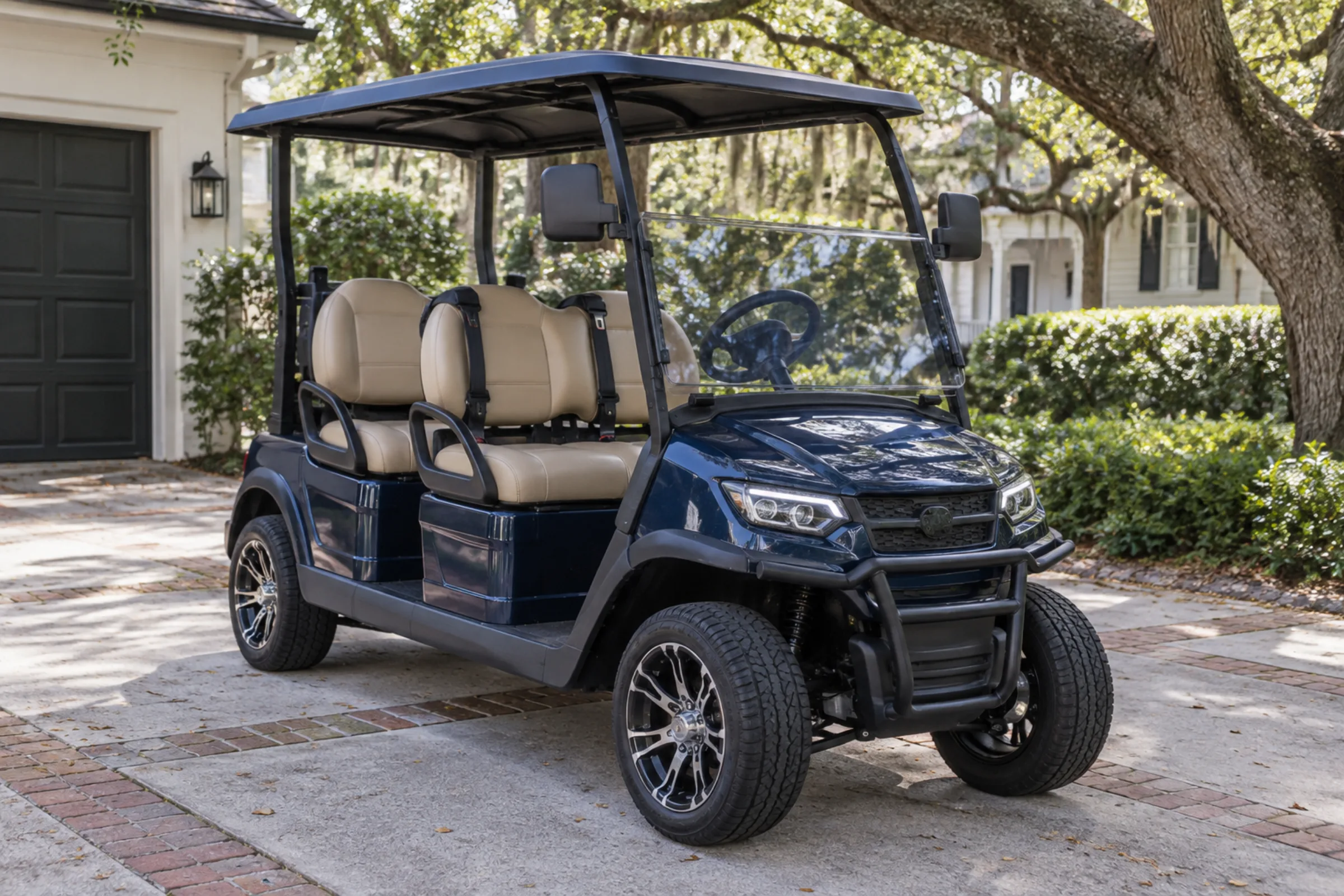
Charleston is one of the strongest used golf cart markets in the country, for a simple reason: on the islands and in the cart-friendly neighborhoods, an LSV is not a toy, it is the second car. Demand is constant, supply turns over fast, and a well-presented cart can sell in days. Here is how the market actually prices them, and where detailing genuinely moves the number.
The price bands, roughly
Every cart is its own story, but the local market sorts into recognizable bands:
- $4,000 to $8,000: older gas and electric carts, base builds, tired batteries, cosmetic wear. Solid transportation, priced by condition above all.
- $8,000 to $14,000: the heart of the market. Late-model Club Car, E-Z-GO, and Yamaha builds, and most ICON and Evolution carts a few years old. Street-legal packages, decent batteries, four or six seats.
- $14,000 to $20,000+: newer premium builds, lithium packs, six-seaters, custom wheels and seats, and carts still under some warranty. Buyers here are choosing between you and the dealership floor.
Within a band, three things set the number: batteries, legality, and condition. Batteries because a lead-acid replacement runs real money and buyers know it; ask for the battery age in the first message and so will they. Legality because a true LSV with lights, VIN, and registration opens every neighborhood street to the buyer, while a course cart does not. Condition because in a market where buyers have choices, doubt is the discount.
Where detailing changes the price
Detailing cannot move a cart between bands. No wash turns an eight-year-old E-Z-GO into an ICON. What it does, powerfully, is move a cart within its band, and the mechanism is doubt.
A used-cart buyer cannot inspect a controller or verify battery habits. So they read what they can see: chalky paint reads as sun-beaten and neglected, mildewed seats read as stored wet, corroded terminals read as electrical trouble coming. Each visible flaw invites a mental discount bigger than the flaw itself, because buyers price the problems they cannot see by the ones they can.
Reverse it and the same psychology works for you. Corrected, glossy paint photographs like a newer cart, and photos are the entire first round of this market, whether on Marketplace or the neighborhood group chats where half of Daniel Island's carts change hands. Clean terminals answer the electrical question before it is asked. Fresh-smelling seats erase the stored-wet story. The cart stops generating doubt, and doubt is what lowball offers are made of.
The numbers on presentation
Our pre-sale detail costs $349 and includes paint correction, full interior extraction, chrome polish, undercarriage salt removal, and battery terminal treatment. Against the mid band, that is two to four percent of the asking price, and the practical difference between a listing that says maintained and one that says make me an offer is reliably more than that. One Daniel Island seller we detailed listed at full market and sold in four days, with the buyer citing the cart's condition unprompted.
Two honest caveats. First, detailing a cart with dead batteries is lipstick; fix the thing buyers test-drive before the thing they photograph. Second, do not detail-and-hide. Presentation removes doubt about care; it does not remove the obligation to disclose the controller issue. Around here your buyer is often a neighbor, and the islands are small.
Timing the sale
The Charleston cart market has a season. Demand climbs from March, peaks with early summer, and holds through August as rental owners refresh fleets and new arrivals close on houses. Listing in April with corrected paint and fresh photos catches buyers at their most motivated. November listings fight both the calendar and the light.
If you are a year or more from selling, protection now is resale money later: a cart that spends its last two owned summers under a ceramic coating arrives at listing day without the chalk that would have needed correcting anyway.
The short version
Know your band, fix the batteries first, then spend on presentation and photos. In a market this active, the cart that looks cared for gets the calls, and the calls are where full asking price lives.
Written by the crew at Clean Carts, mobile golf cart detailing for the Charleston coast. Salt questions welcome: (843) 555-0147.